 How can more trains run through Tunbridge Wells when the existing two platforms are at capacity? Almost four million people a year use the station to travel towards either Tonbridge, Sevenoaks and London or to Hastings. It takes little for services at this location to grind to a standstill. A few hundred metres to the south, the situation is made worse by the stretch of single track required to pass through Strawberry Hill Tunnel (the history of the tunnels south of Tunbridge Wells is interesting but beyond the scope of this post).
Both of the main buildings at Tunbridge Wells Central are listed buildings and among the best examples of (on Platform 1) early Victorian and (on platform 2) Edwardian railway architecture surviving in the area. The station is also in a conservation area. It is therefore not possible to demolish the whole district and start again (as the Victorians would themselves have done!).
What turns this from an impossible project into a difficult one is the geography of the immediate area. The two existing platforms are set considerably below the level of the surrounding streets and buildings. In the map the area of the existing station is coloured dark grey. I have indicated on the map above a possible path for a new section of railway (to the south it joins the existing Hastings Line at a point adjacent, though on the other side of the tracks) to the previous line to Tunbridge Wells West, while at the top it gently curves towards Pembury and Paddock Wood. The red sections are expected to be in the open air, the yellow parts in tunnels.
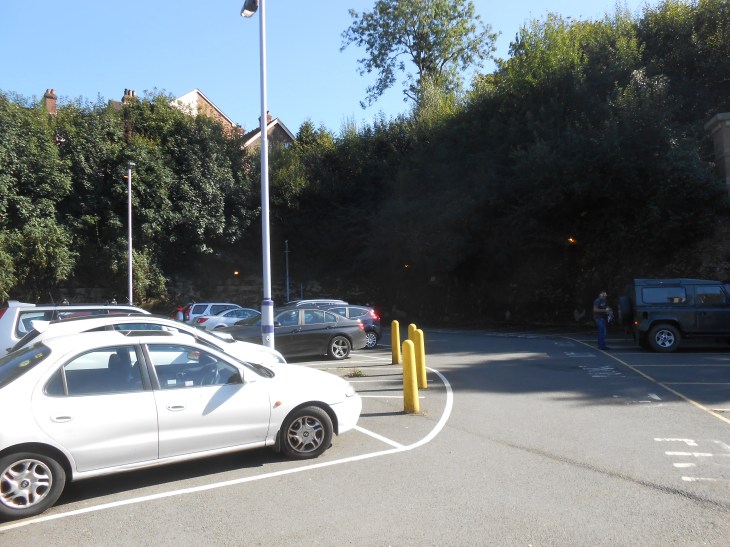
Where, however, are the platforms? Part of these should be adjacent to the existing station, so that a footbridge can easily link them all together. Such a link could only be provided towards the bottom part of the existing (grey) station, close to the red area. This piece of land is currently a small railway-owned car park. However, platforms here would only be of at best two carriages in length. I feel that the best option would be to extend them in a tunnel section underneath the Grove (the green space just south of the existing station). The Hastings line is also in tunnel at this point. I suspect that the engineering challenges of building under the park are far less than doing the same beneath roads and buildings (the tunnel at this point, of course, having to be much wider to accommodate the platforms as well as the tracks). The next post may help the reader to visualise this, as may the picture below of a similar arrangement at Balcombe Station in Sussex (although this is a Victorian version and the tunnel pictured is, of course, much shorter).

All the same, this is the most complex and expensive part of the project. However, before writing it off as impossible, consider the challenges of driving Crossrail through Central London.

 Heart Of Kent Line